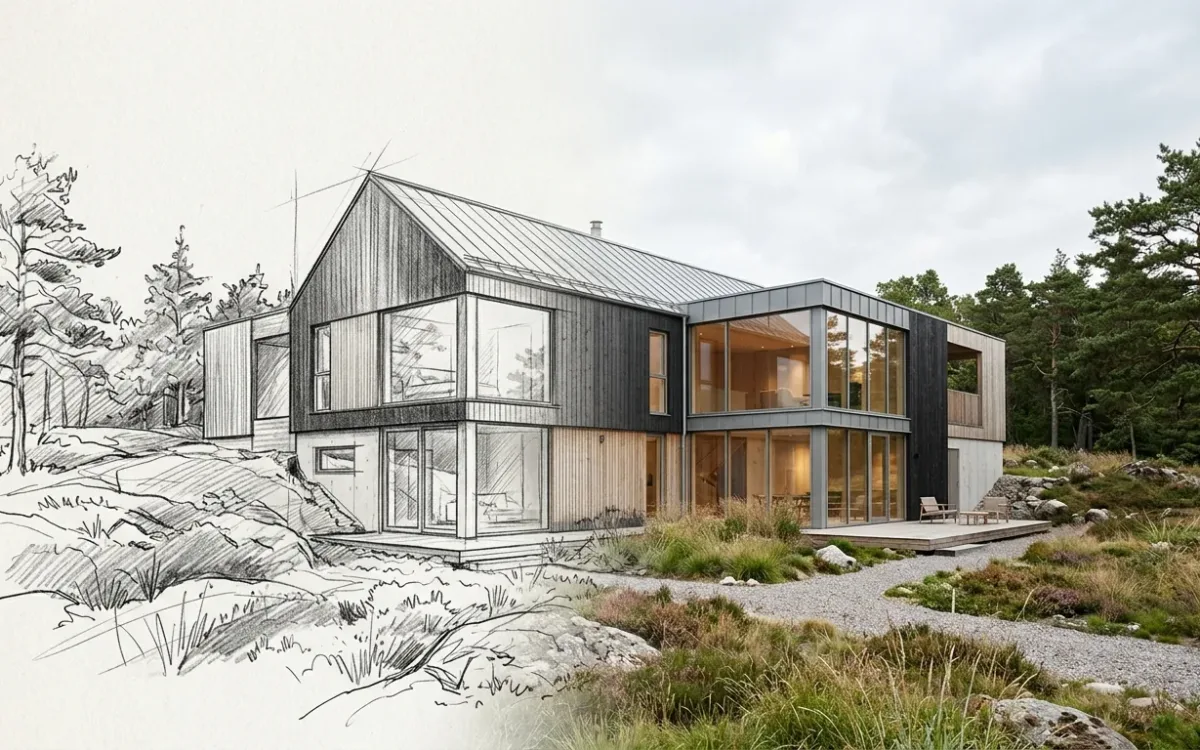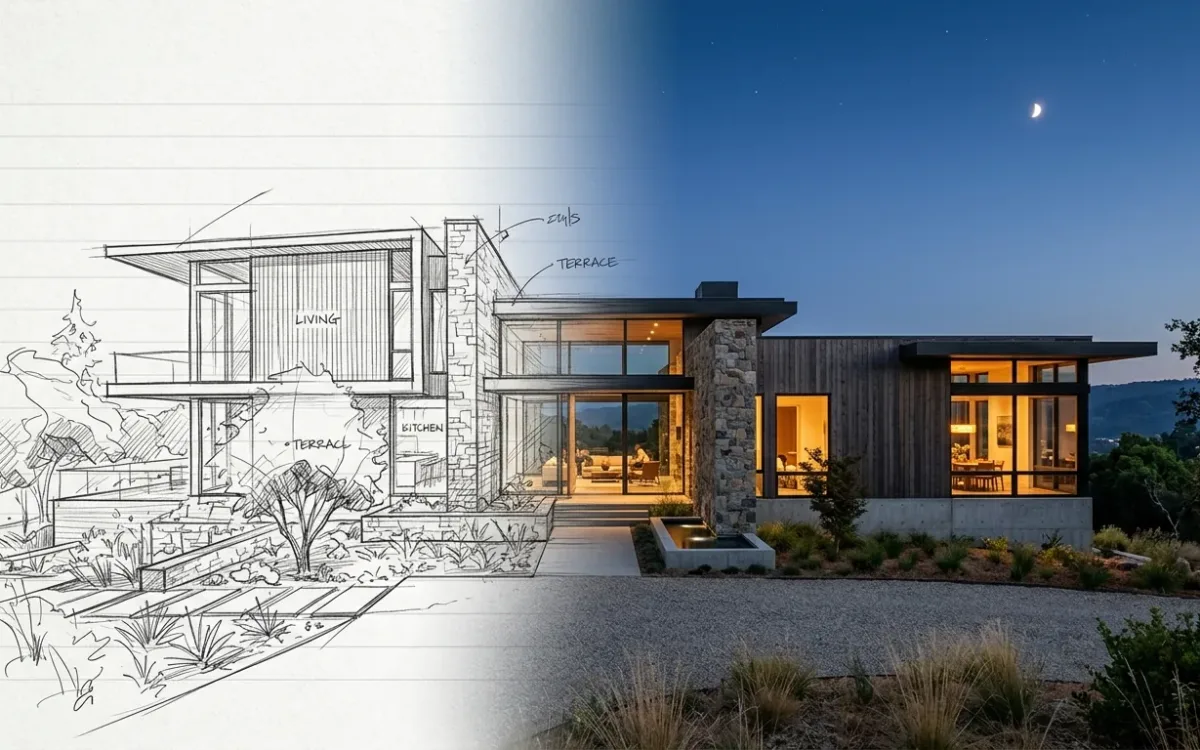
Watercolor Architectural Rendering: When Less Realism Communicates More
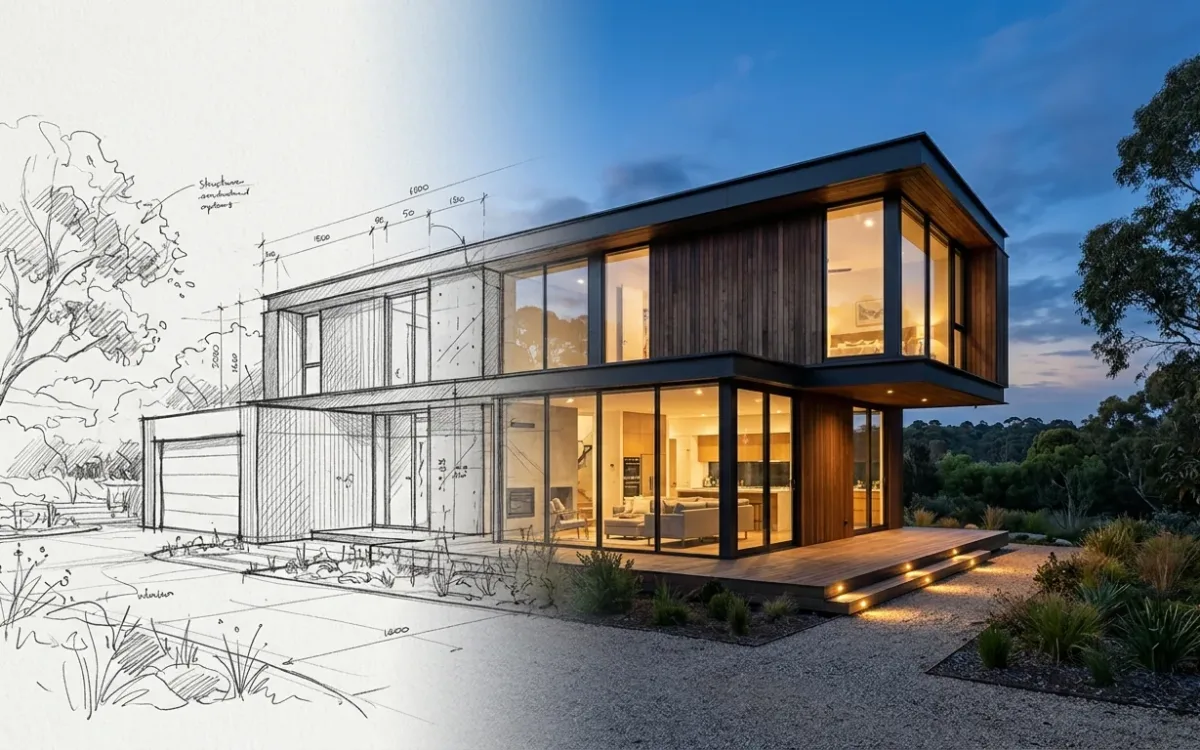
Why the watercolor register beats photorealism at concept stage, the mechanics that make it read as genuine, and the 3 ways to produce it today.
Insights on architectural visualization, AI rendering, and design technology.
Why the watercolor register beats photorealism at concept stage, the mechanics that make it read as genuine, and the 3 ways to produce it today.
What real-time rendering engines genuinely solve, the prerequisites they keep, a fair comparison of the 5 main options, and the bottleneck question that decides the purchase.
Craft engines, real-time engines, AI renderers: what each family of rendering programs actually requires, what it costs beyond the license, and how to choose by what you produce.
A map of architectural visualization in 2026: the craft, the people, the economics, and an honest account of what AI rendering changes for architects and what it cannot do.
A working architect's guide to every rendering path: what the craft stack really costs, why outsourcing breaks the design loop, and how AI rendering removes the reconstruction tax for everyday images.
Rendering is slow because it reconstructs reality from zero every time. Here is what actually trims that, what optimization cannot fix, and where the honest limits of AI rendering sit.
What SketchUp AI rendering takes from your model, which parts of traditional render prep you can drop, how a 30-second render changes the design week, and the 3 limits every AI tool shares.
The comparison turns on one question: whose geometry ends up in the render. Where Flux2 wins, where a source-authoritative pipeline wins, and the limits both tools share.
The 4 bottlenecks in an archviz pipeline fail in different ways and need different fixes. What genuinely removes each one, and where a cloud render farm only relocates the queue.
Materials read as real when light interacts with them honestly. What the PBR map stack buys you, what hand-tuning it really costs, and where AI rendering still struggles.
Why renders plateau at technically correct but unconvincing, what honest light means, what post-production cannot repair, and how photography-trained models change the input.
Revit gets the building right and the image wrong. Why native output reads as sterile, what a Revit model actually contributes to a photorealistic render, and the screenshot workflow that uses it.